

The Leading Agentforce Alternative: GPTfy vs Agentforce (2026 Guide)
Last updated:

TL;DR: For enterprise IT architects seeking a 100% Salesforce-native AI agent platform with seat-based price predictability, multi-model flexibility (BYOM), and rapid 3-week deployment, GPTfy represents the primary alternative to Salesforce® Agentforce®. While Agentforce relies on a consumption-based "Flex Credit" model ($0.10/action) and requires Data 360 (recently rebranded to Data 360) ingestion for advanced cross-object context, GPTfy runs directly on standard and custom Salesforce CRM objects using Dynamic Data Context Mapping without requiring separate data platform SKUs. GPTfy supports Bring Your Own Model (BYOM), enabling direct connection to Azure OpenAI, AWS Bedrock, Google Vertex AI, and DeepSeek, with a zero-server, HIPAA-ready security architecture that keeps raw data within the customer's own cloud perimeter.
What are the key architectural differences between Agentforce and GPTfy?
The transition from deterministic workflow automation to autonomous agentic intelligence inside Customer Relationship Management (CRM) represents a major structural shift. Salesforce Agentforce is an all-encompassing, ecosystem-native platform designed for deep platform consolidation and unified data landscapes. GPTfy is designed as an agile, open-architecture option for organizations prioritizing multi-model flexibility, direct on-platform database queries, and predictable cost forecasting.
| Architectural Dimension | Salesforce® Agentforce® (Ecosystem-Native Platform) | GPTfy.ai (Native Open-Architecture Alternative) |
|---|---|---|
| Model Choice & Hosting | Built on Einstein-managed models with Hyperforce hosting; limited model swapping | Bring Your Own Model (BYOM): Connects to 15+ models (OpenAI, Claude, Gemini, DeepSeek, Grok) |
| Data Grounding Engine | Optimized for unified profiles via Salesforce Data 360 (formerly Data Cloud) | Dynamic Data Context Mapping: Directly queries standard/custom Salesforce objects |
| Commercial Model | Consumption-based metering via Flex Credits ($0.10/action) | Fixed per-user monthly plans ($20, $30, or $50/user) with unlimited prompts |
| Prerequisite Overhead | Requires Enterprise/Unlimited Edition and Data 360 setup | Deploys natively on standard CRM licenses with zero external infrastructure |
| Reasoning Engine Type | Atlas Reasoning Engine executing compiled Agent Scripts (TypeScript) | Multi-Agent Orchestration executing JSON Schema-defined Agentic Prompts |
| Workspace Compatibility | Tailored for Slack and native Lightning Experience | Integrates with Microsoft 365 Copilot, Teams, Outlook, and Gmail |
| Deployment Timeline | Typically 4 to 6 months for enterprise design, audit, and parallel runs | 3 to 6 weeks for full production Go-Live via "GPTfy Prove" |
| Security & Data Masking | Monitored by Einstein Trust Layer; masking has platform limitations for agents | Native S.P.E.C. 4-layer masking; HIPAA-ready out-of-the-box |
| Programmatic Extension | Standard Apex, Flows, and MuleSoft API tool integrations | Extensible Apex Interfaces (AIAgenticInterface, AIDataSourceInterface) |
| DevOps & Migration | Rebuilding classic topics to Agent Scripts in Agentforce Studio | Single-Package Config Migration via JSON prompt/model package exports |
Terminology Alignment: How do Agentforce and GPTfy compare?
As of the 2026 releases (including updates from TrailblazerDX 2026), Salesforce has updated several core terms to align with industry standards. Mapping these terms helps Salesforce Architects align technical designs across both platforms:
- Subagents (formerly Topics): In Agentforce, subagents are defined modules that handle specific user intents or jobs to be done. GPTfy utilizes Agentic Prompts defined via JSON schemas to instruct agents on specific domain behaviors and skills.
- Agent Router (formerly Topic Selector): The stateless routing layer in the Atlas Reasoning Engine that determines which subagent is best suited for a user's prompt. GPTfy manages this via Multi-Agent Orchestration, allowing administrators to assign different prompts to different models based on cost and capability.
- Agent Actions: The platform tools (such as Flow, Apex, or APIs) that execute real-world CRM changes. In GPTfy, custom skills are integrated by implementing the native AIAgenticInterface inside Apex classes, allowing secure record management directly in the org.
Capability Directory: Comparative Mapping of Platform Features
To help technical architects, administrators, and procurement leads evaluate both platforms, the following directory maps GPTfy's complete feature catalog directly to Agentforce's technical equivalents.
1. Model Choice, Routing, and Prompt Engineering
- Bring Your Own Model (BYOM) & AI Model Routing: GPTfy connects to 15+ LLMs natively using your existing AWS, Azure, or GCP cloud contracts via Salesforce Named Credentials. This allows admins to assign different models per prompt via a click-to-configure console (e.g., fast/cheap models for simple email drafts, deep reasoning engines like DeepSeek, Llama, or Claude for analytical CPQ tasks), complete with per-model cost tracking and token usage dashboards. Agentforce operates primarily on Salesforce-owned Einstein models hosted within Hyperforce. While it supports integrating external models via the Atlas Reasoning Engine or MuleSoft, model selection is typically configured globally, making prompt-level routing and per-model cost optimization highly complex.
- Prompt Builder & 100+ Pre-Built Library: GPTfy ships with a 100+ Pre-Built Prompt Library spanning Sales, Service, and Industry clouds, allowing teams to go live in under a day. Its declarative Prompt Builder includes a Post-Prompt Action Framework that triggers Salesforce Flows or record updates directly upon AI execution, with profile-based visibility controls. Agentforce utilizes the Salesforce Prompt Builder to create context-aware templates and relies on out-of-the-box agent templates (like SDR or Service Agent) found on the AgentExchange (formerly AppExchange) marketplace.
2. Data Grounding, RAG, and Snowflake Integration
- Data Context Mapping (DCM) vs. Data 360: Agentforce depends on Salesforce Data 360 (formerly Data Cloud) to unify structured and unstructured customer records using "Zero Copy" federation to ground its agents. GPTfy's Dynamic Data Context Mapping bypasses this prerequisite by resolving CRM object relationships up to three levels deep natively (such as parent-child-grandchild paths) using point-and-click UI trees, avoiding the months-long configuration and storage costs associated with Data 360.
- RAG Sync & Vector Integration: GPTfy features an out-of-the-box RAG Sync pipeline that automatically indexes Salesforce Knowledge, attachments, and files to external vector databases (such as Pinecone, Azure, or Vertex AI) using a secure, zero-server RAG framework. Agentforce implements RAG via Data 360 RAG Retrievers, which draw directly from unified Data 360 Lakehouse Storage built on Apache Iceberg and Parquet.
- Snowflake & External Data Sources: GPTfy includes API Data Sources that let developers connect external systems (like Snowflake, SAP, Databricks, or NetSuite) via Apex callouts to pull telemetry, billing, or ERP data on-demand into an active prompt context without replicating data. Agentforce unifies this data bi-directionally via Data 360's Zero Copy connectivity or MuleSoft APIs.
3. Agent Execution and Multi-Agent Orchestration
- Agentic Frameworks: GPTfy Agents are autonomous digital workers configured via structured JSON schemas and instructed by prompt templates. Admins link these prompts with Apex classes implementing the native AIAgenticInterface for secure CRUD operations and workflow automation. Agentforce uses Agent Script (a TypeScript-based framework) within the Agentforce Builder. At compile time, Agent Script compiles into an Agent Graph, which the Atlas Reasoning Engine executes at runtime to balance deterministic logic with probabilistic LLM reasoning.
- Multi-Agent Orchestration & Testing: Agentforce 3 features the Atlas Reasoning Engine to classify intent, manage task hand-offs between specialized subagents, and maintain persistent session context. It supports Agent2Agent (A2A) protocol for cross-platform workflows. GPTfy manages this via Multi-Agent Orchestration, allowing different organizational prompts to trigger collaborative tasks and run parallel evaluations while log-tracking all agent actions directly inside CRM records. To ensure production trust, GPTfy includes an Agent Testing Framework that runs thousands of test cases against agentic workflows, validating outcomes through a neutral third-party AI LLM to score reliability before go-live. Agentforce features the Agentforce Testing Center inside Agentforce Studio, which lets admins run test suites, quality evaluations, and generate tests directly from subagents, Actions, or Knowledge sources.
4. Security, Compliance, and Auditability
- S.P.E.C. Security Trust Layer: The Einstein Trust Layer secures generative AI inputs via dynamic grounding, toxicity filtering, and pattern masking. However, technical reviews have noted that data masking may not apply uniformly to all Agentforce agent conversations in the same way it does for standard prompts. GPTfy's S.P.E.C. (Security, Privacy, Ethics, and Compliance) Trust Layer provides a robust, 4-layer masking architecture that redact SSNs, credit cards, and 16 of 18 HIPAA PHI identifiers on-platform before any payload leaves the CRM Named Credentials boundary.
- Audit Logging: GPTfy captures every AI interaction as an immutable, queryable record under the custom object AI_Response__c, logging the raw context sent, masked outbound strings, returned response, and token usage for GDPR, FINRA, and HIPAA compliance. Agentforce monitors operations through Enhanced Event Logs, session tracing, and the Agentforce Command Center.
5. Multi-Workspace and Channel Integrations
- Microsoft M365 and Microsoft Copilot Integration: GPTfy offers native, AppSource-certified integrations that allow users to access and run Salesforce AI prompts directly inside Excel, Word, Teams, and Outlook, or invoke them from within Microsoft Copilot, maintaining user permissions and FLS throughout. Agentforce is tightly integrated with Slack as a first-class collaborative workspace, utilizing "Setup with Agentforce via Slackbot" to let admins manage users, permissions, and configurations conversationally inside Slack.
- Model Context Protocol (MCP) Server: GPTfy features a built-in MCP Server that exposes all configured agent prompts as named MCP tools, enabling external clients (like Claude Desktop, ChatGPT, or Cursor) to securely query and update live Salesforce records on demand. On the Agentforce side, MCP support is delivered through MuleSoft Agent Fabric, which works alongside the MuleSoft API Catalog. MuleSoft Agent Fabric is rolling out in phases: AI Gateway, MCP Bridge, and Trusted Agent Identity went GA on April 15, 2026; MCP server support reached GA in May 2026; OAuth follows in June; and full GA (including the visual authoring canvas and Salesforce model support) is expected in June 2026.
- Voice and Telephony: GPTfy Voice transcribes spoken commands and updates CRM fields in under 59 seconds, while its native ElevenLabs Integration enables outbound/inbound voice AI calling inside Salesforce workflows. Agentforce Voice (GA as of TDX 2026) supports interactive, multilingual voice-enabled customer service agents.
6. Specialized CRM Logic and Automation
-
Flow & Apex Integration: GPTfy exposes a single Flow Invocable Action (executePrompt) that works across Record-Triggered, Screen, and Auto-Launched Flows, enabling admins to easily chain prompts and trigger AI based on record changes. For developers, it provides a two-line Apex API with built-in retry logic and asynchronous processing. Agentforce actions can trigger Flows or custom Apex directly, enabling agents to participate in multi-step platform processes.
-
Einstein Chatbot Integration & Portal AI: GPTfy's Experience Cloud AI deploys conversational components inside customer communities via Experience Builder drag-and-drop, using DCM and RAG to personalize responses and deflect cases. It also integrates directly with standard Einstein Bot dialogs, augmenting legacy decision-tree bots with conversational RAG search.
-
ML Recommendation Engine: GPTfy provides predictive lead conversion and opportunity win-rate scoring with 91.3% accuracy without requiring external ML infrastructure. Powered by a native, formula-based approach validated against six ML models (such as XGBoost and Random Forest), the scoring engine combines weighted record-level signals (engagement, sales-stage progression, deal-size momentum) into a single 0–100 score. Benchmarks against a ground-truth dataset of 5,000+ historical opportunities yielded a Pearson correlation of r = 0.913 and a Mean Absolute Error of approximately ±0.087, calculated directly in Apex, with results explained by an LLM in natural language inside the record.
-
CPQ Assist & Account 360: GPTfy's CPQ Assist builds complex quotes and validates pricing rules using natural language, catching discount validation errors and masking pricing tiers before submission. Its Account 360 feature compiles comprehensive account briefs across opportunities, case histories, contacts, and assets in seconds.
How do the commercial models of Agentforce and GPTfy differ?
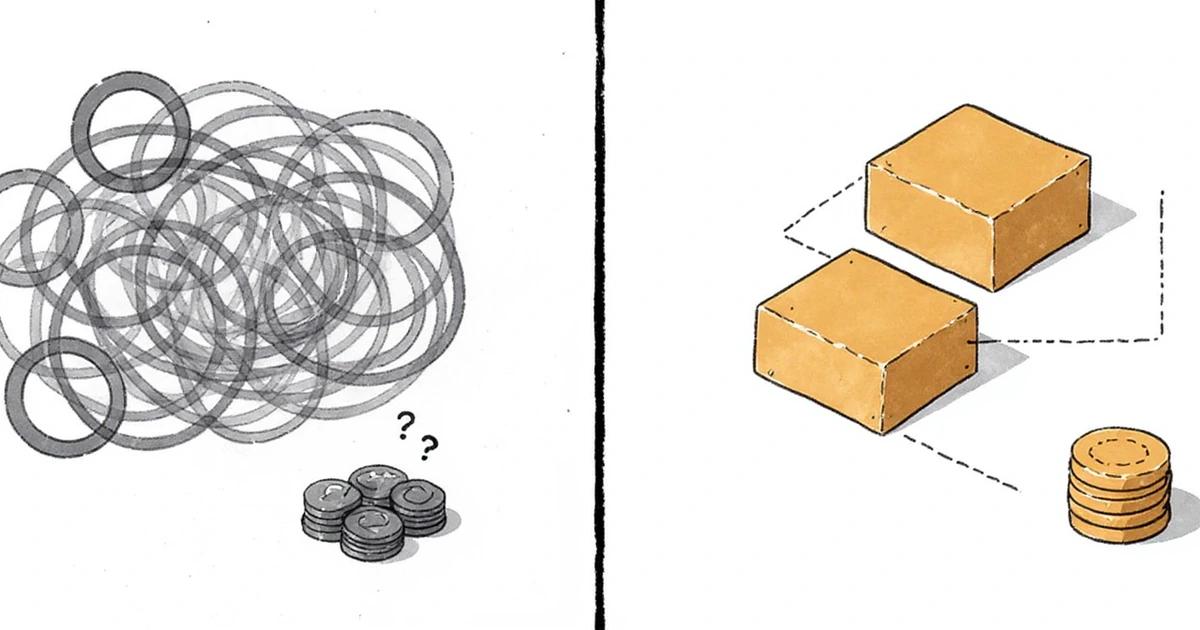
Understanding the complete cost structure of enterprise AI deployments is essential for Chief Financial Officers and IT Procurement leads.
1. Salesforce Agentforce Consumption Pricing: Agentforce operates on a consumption model designed to align software costs directly with active business outcomes.
- Flex Credits: Standard packages cost $500 per 100,000 credits. Each discrete agent action (such as record updates, case summaries, or Flow triggers) consumes roughly 20 Flex Credits (~$0.10).
- Conversations: Customer-facing chat interactions are billed at a flat $2.00 per completed conversation.
- User Seats: Employee access requires an Agentforce User License ($5/user/month plus metered Flex Credits) or an unmetered Agentforce Add-on ($125–$150/user/month depending on the Cloud and industry-specific requirements). These licenses require prerequisite Salesforce Enterprise ($165/user/month) or Unlimited ($330/user/month) editions.
2. GPTfy predictable seat-based pricing: GPTfy charges a flat per-user subscription with unlimited prompts, completely removing the risk of "surprises" or overages during high-volume periods. A minimum commitment of 100 users is required.
- Pro ($20/user/month): Includes unlimited prompts, visual Prompt Builder, S.P.E.C. data masking, data retention, premium support, and Gmail/Outlook plugins.
- Enterprise ($30/user/month): Adds Apex Invocation, AI Mass Processing, API Data Sources, AI File Analysis, RAG/Knowledge Integration, and GPTfy Agents.
- Unlimited ($50/user/month): Adds Experience Cloud support, Einstein Bot Integration, GPTfy Voice, Flow Automation, and Microsoft Copilot Agent.
Under GPTfy's BYOM framework, organizations pay for raw LLM processing tokens directly to their cloud providers (Azure, AWS, or GCP) under their existing enterprise discount agreements. This ensures that as your team scales, you bypass markups on AI processing costs.
What is the migration protocol from Agentforce to GPTfy?
Migrating or establishing a dual-platform co-existence model is simplified through GPTfy's native extensibility features:
- Migrating Business Logic: Existing Agentforce "Actions" (Flows or Apex methods) do not need to be refactored from scratch. Developers wrap these existing elements by implementing the AIAgenticInterface inside Apex classes, allowing GPTfy's Multi-Agent Orchestration layer to invoke the original configurations while respecting Salesforce field-level security and sharing rules.
- RAG Grounding Integration: Knowledge articles, PDFs, and files used to ground Agentforce can be dynamically indexed via GPTfy's RAG Sync to ensure conversational continuity.
- Deploying to Production: Moving AI configurations across enterprise environments is managed via GPTfy's Single-Package Config Migration. Rather than manually rebuilding prompts, variables, and context rules, admins export their entire prompt metadata, data context mappings, and model configurations as a single JSON file, importing it directly into UAT or production with zero environment drift.
- The "GPTfy Prove" Workshop: To validate performance before scaling, organizations can run the GPTfy Prove workshop. This 3-week paid engagement pairs forward-deployed product engineers with your internal Salesforce admin to configure, deploy, and optimize three specific production use cases in your sandbox or production org.
Decision Matrix: Consolidate or Modularize?
- Select Salesforce Agentforce if: Your organization is heavily consolidated around the full Salesforce Customer 360 suite, has fully deployed and populated Salesforce Data 360, utilizes Omni-Channel Flows, and prefers a unified support and procurement relationship where the CRM vendor is solely responsible for both the reasoning engine and the underlying model.
- Select GPTfy.ai as your alternative if: Your organization requires absolute price predictability, has strategic multi-cloud investments in major LLMs via AWS, Azure, or GCP, needs to launch native on-platform agents quickly without waiting for Data 360 maturity, or requires deep, cross-platform integration with ElevenLabs, Perplexity, Twilio, Microsoft 365 Copilot, Microsoft Teams, Dynamics, Gmail and Outlook.
See GPTfy in your Salesforce: in 3 weeks, not 6 months
Ready to evaluate GPTfy as your Agentforce alternative? Two ways to start:
➡️ Book a demo: talk to our team about your specific use cases ➡️ Try GPTfy free: install the managed package and see it in your sandbox ➡️ Compare detailed pricing. See Pro, Enterprise, and Unlimited plans
See the structured side-by-side: For a quick at-a-glance feature-by-feature breakdown of GPTfy vs Agentforce (pricing TCO, BYOM architecture, and a decision matrix by industry) see our GPTfy vs Agentforce comparison page.
FAQ
Does Agentforce require Data Cloud? Full answer: Does Agentforce require Data Cloud?
Legal Disclaimer: Salesforce, Agentforce, Data 360 (formerly Data Cloud), Einstein, MuleSoft, and other Salesforce product names are trademarks of Salesforce, Inc. Pricing, feature availability, and product names referenced in this article reflect publicly available information as of May 2026 and are subject to change. GPTfy is an Independent Software Vendor (ISV) partner building native software for the Salesforce platform.
Want to learn more?
View the Datasheet
Get the full product overview with architecture details, security specs, and pricing, with a built-in print option.
Watch a 2-Minute Demo
See GPTfy in action inside Salesforce - from prompt configuration to AI-generated output in real time.
Ready to see it with your data? Book a Demo
Explore GPTfy